
What Is Forestry Mulching?
Forestry mulching is an efficient land clearing method that uses specialized equipment to grind trees, brush, and dense vegetation into mulch directly on-site. Unlike traditional land clearing, forestry mulching typically leaves stumps and root systems intact, minimizing soil disturbance and helping reduce erosion. The resulting mulch creates a natural ground cover that helps retain moisture and protect the soil. It’s an ideal solution for clearing overgrown properties, maintaining trails, improving access, and reclaiming usable land without the need for extensive debris removal or hauling.
The mulcher handles standing trees, fallen trunks, and accumulated brush in a single operation, grinding material to uniform chip size regardless of whether it's green growth or weathered deadfall.
How Forestry Mulching Addresses Debris and Regrowth
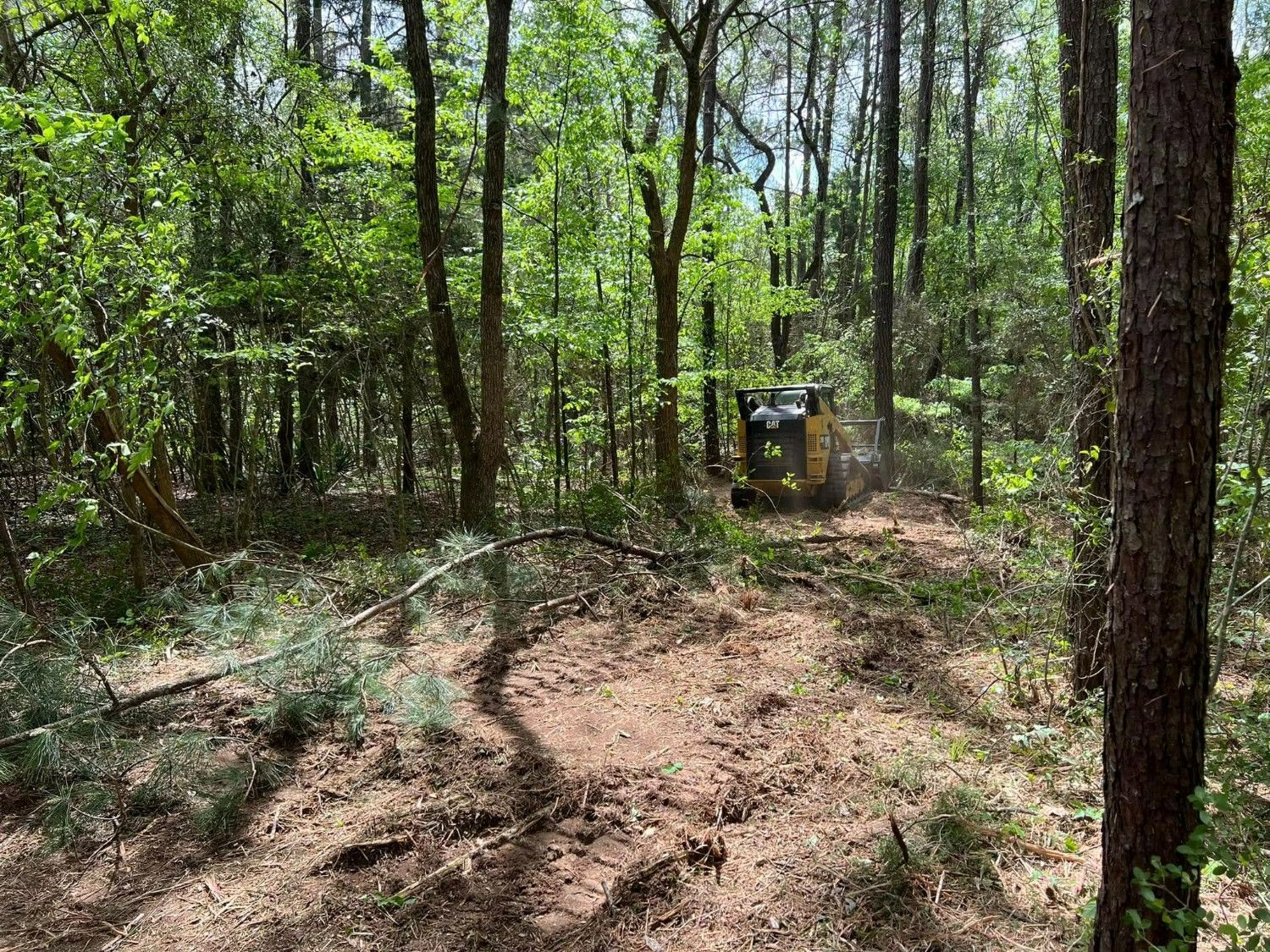
The Denis Cimaf attachment mounts to the front of the 275XE and uses rotating teeth to pulverize wood fiber—trees are fed into the mulcher head and exit as chips, which are either left where they fall or spread deliberately for erosion control.
After processing, the property shows cleared ground covered with a protective mulch layer rather than the torn soil and debris piles left by conventional clearing. The chips absorb rainfall instead of shedding it, which reduces runoff velocity and keeps soil in place during heavy weather events. You also notice that regrowth emerges more slowly through mulch than it does on scraped ground, as the chip layer blocks sunlight and creates a physical barrier to sprouting—properties mulched in spring often remain clear through the following winter with minimal maintenance.
What Clients Ask About Forestry Mulching
Property owners dealing with storm debris or property maintenance want to know how mulching compares to traditional clearing methods and what the processed material does to the soil over time.
What happens to the mulch after it's spread on the property?
After forestry mulching, the shredded trees and vegetation are left on the ground as a natural layer of mulch. Over time, the mulch gradually decomposes, returning organic matter and nutrients to the soil. This layer also helps retain moisture, reduce erosion, and suppress unwanted vegetation growth. Aws the milch breaks down, it naturally blends into the landscape, making forestry mulching an environmentally friendly and cost-effective way to clear and maintain your property.
How does forestry mulching prevent erosion compared to dozer work?
Forestry mulching helps minimize soil erosion by leaving the ground largely undisturbed while preserving existing root systems. Unlike traditional bulldozer clearing, which can expose and disturb large areas of soil, forestry mulching grinds trees and brush into a natural layer of mulch
that remains on the property. This protective covering helps absorb rainfall, slow water runoff, and reduce soil displacement. By maintaining the soil’s natural structure and providing ground cover, forestry mulching offers a less invasive approach to land clearing while helping protect your property from erosion.
How much material can the Denis Cimaf mulcher process in a day?
Output depends on tree size and vegetation density, but the attachment handles substantially more volume than smaller mulchers or manual cutting—dense hardwood stands require more time per acre than previously thinned areas or lighter brush.
What size trees can the mulcher handle without requiring separate cutting?
The equipment processes moderate-diameter timber in a single pass, reducing both standing trees and fallen logs to chips without needing chainsaw work or log skidding—larger diameter trunks may require multiple passes, but the mulcher eliminates the need for separate debris handling.
Big Dog Land Clearing upgraded to the Denis Cimaf mulcher specifically for the mixed hardwood and storm debris conditions typical of East Texas properties. Request an evaluation to discuss debris volume, terrain access, and project scheduling for your acreage.