Canopy Access Without Tree Removal
Underbrushing Services for properties needing understory cleared while preserving mature timber
The understory layer beneath mature trees—scrub oak saplings, cedar volunteers, vine tangles, and dense brush—blocks movement and sight lines while creating fire hazard and wildlife cover that many property owners want removed without cutting the canopy itself. Big Dog Land Clearing addresses this with Caterpillar mulching equipment that processes ground-level vegetation and small timber into chips on-site, leaving larger trees standing. This service opens wooded parcels for access, fencing, or recreational use without the wholesale clearing required for development.
The process targets vegetation below the main canopy—vines volunteer saplings competing for light, and the brush layer typical of Southeast and East Central Texas properties where rainfall and mild winters support aggressive regrowth. Equipment chips material as it moves through, leaving a mulch layer on the forest floor rather than debris piles requiring haul-off.
Request a property assessment to identify understory density and access routes for equipment.
What Proper Underbrushing Requires
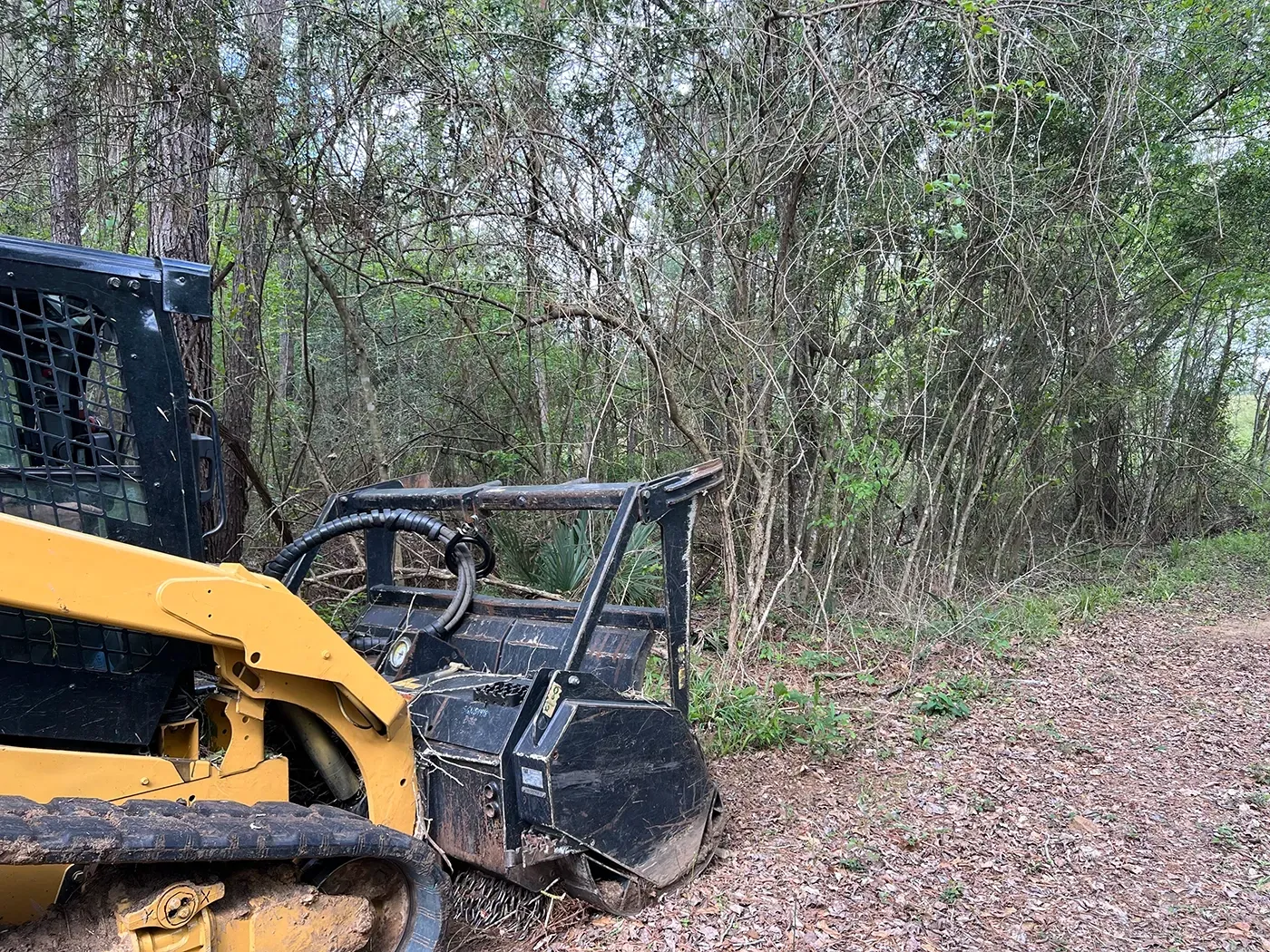
Selective removal begins with identifying which vegetation stays and which gets processed—mature trees marked for preservation are avoided while the mulcher clears everything below a certain height threshold. The Caterpillar equipment maneuvers around standing timber, processing vines, brush, and small saplings that have accumulated over years of unchecked growth.
You notice immediate sight line improvement once the brush layer is gone—walking the property no longer requires pushing through tangled growth, and fence lines or boundary markers become visible where they were previously obscured. The ground surface shows a layer of wood chips rather than bare soil, which prevents erosion and suppresses the immediate regrowth that follows cutting without mulching.
Answers to Frequent Underbrushing Questions
Property owners managing wooded acreage or preparing land for recreational use typically want to know how underbrushing differs from full clearing and what regrowth looks like afterward.
What vegetation gets removed during underbrushing?
The service targets vines, brush, small saplings, and volunteer growth below the main canopy—mature trees above a certain diameter are left standing while everything competing at ground level is mulched into chips.
How does underbrushing affect soil compared to dozer clearing?
The mulcher processes vegetation in place without blade contact, so soil structure and established root systems remain undisturbed—this prevents the compaction and erosion channels that follow grading or dozing.
When should underbrushing be done before fence work?
Clearing understory before fence installation allows accurate post placement and wire stringing without having to work around tangled brush—the settled mulch surface also provides stable footing for post-hole digging and equipment access.
How quickly does brush regrow after underbrushing?
Regrowth rate depends on rainfall and soil conditions, but the mulch layer left on-site suppresses sprouting for several months—properties in East Texas typically see some regrowth within a year, though it remains manageable compared to the original density before clearing.
What size property can be underbrushed in a single visit?
Equipment handles several acres of dense understory per day depending on terrain and vegetation thickness—small residential parcels often complete in one session, while larger wooded tracts may require multi-day scheduling.
Big Dog Land Clearing operates year-round with equipment suited to the mixed hardwood and brush conditions typical of the region. Schedule an evaluation to determine understory density and project scope for your wooded acreage.